Address
Floor 3, Building B, Honghua Science And Technology Innovation Park,
Longhua District, Shenzhen
Work Hours
Monday to Friday: 9AM - 9PM
Weekend: 10AM - 6PM
Address
Floor 3, Building B, Honghua Science And Technology Innovation Park,
Longhua District, Shenzhen
Work Hours
Monday to Friday: 9AM - 9PM
Weekend: 10AM - 6PM

 ByBT-PON
2026.02.04
As the core terminal equipment for FTTH (Fiber to the Home), the WiFi version of an ONU directly determines the network experience in home and small-scale scenarios. Although both WiFi5 and WiFi6 ONUs are compatible with XPON dual-mode networks, they differ significantly in key dimensions such as speed, concurrency, and power consumption, catering to diverse user needs and usage scenarios.
The core disparities between the two lie in wireless performance, concurrent connectivity, and technical specifications. WiFi5 ONUs (e.g., BT-713XR) are equipped with dual-band WiFi (2.4G & 5.8G), supporting bandwidth ranging from 100Mbps to 1Gbps for basic needs. Their main control solutions prioritize cost-effectiveness, making them suitable for fundamental internet access. In contrast, WiFi6 ONUs (e.g., BT-G711AX) adopt the AX1800 high-speed wireless scheme, featuring higher bandwidth and Orthogonal Frequency Division Multiple Access (OFDMA) technology. Their wireless speed is over 3 times higher, enabling stable connections for a far greater number of devices simultaneously.
Additionally, WiFi6 ONUs deliver optimized latency and power consumption with stronger anti-interference capabilities. WiFi5 ONUs, however, stand out for their cost-effectiveness and stable compatibility, meeting basic networking requirements. Both types support XPON dual-mode self-adaptation, aligning with mainstream carrier networks.
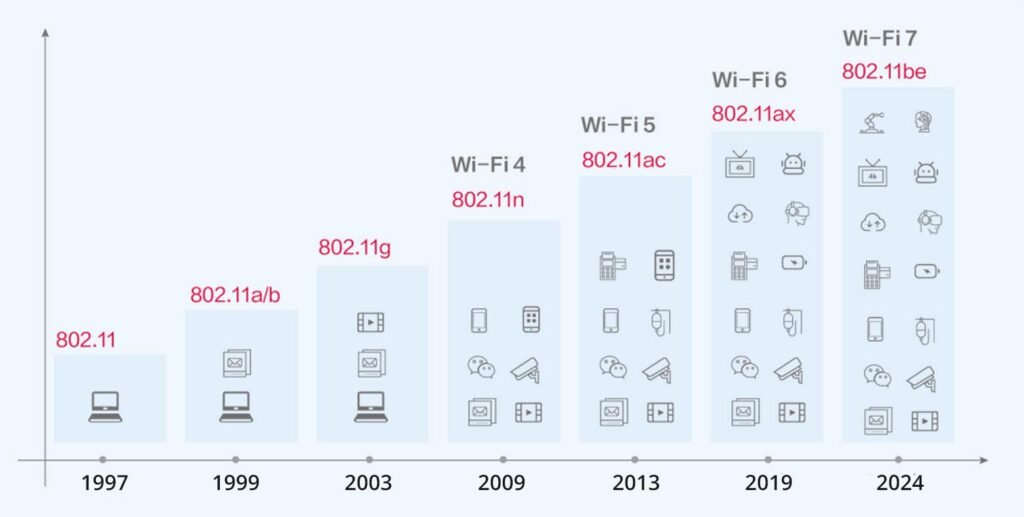
WiFi5 ONUs are ideal for ordinary households, rental properties, and similar scenarios. They satisfy daily internet use and video streaming, supporting 3–5 devices without issues. WiFi6 ONUs better suit multi-device households and small offices, enabling 4K/8K casting, low-latency gaming, and concurrent connections of numerous smart home devices—delivering smooth, lag-free, and stable performance.
Select based on needs|Match performance|Upgrade experience. Covering diverse user requirements, both ONU types enhance fiber-to-the-home experience with stable and compatible features.


